Open Roles
BCBA Student Fellowship openings across Illinois and Texas.
Thank you! Your submission has been received!
Oops! Something went wrong while submitting the form.

BCBA Fellowship Program · Illinois & Texas
Most students piece it together alone: chasing supervision, studying at midnight, then walking into their first BCBA role hoping it clicks. Our Fellowship replaces all of that with a mapped path from Behavior Therapist to BCBA — paid unrestricted hours, supervision above BACB minimums, a cohort that studies together, and leadership work before you're certified.
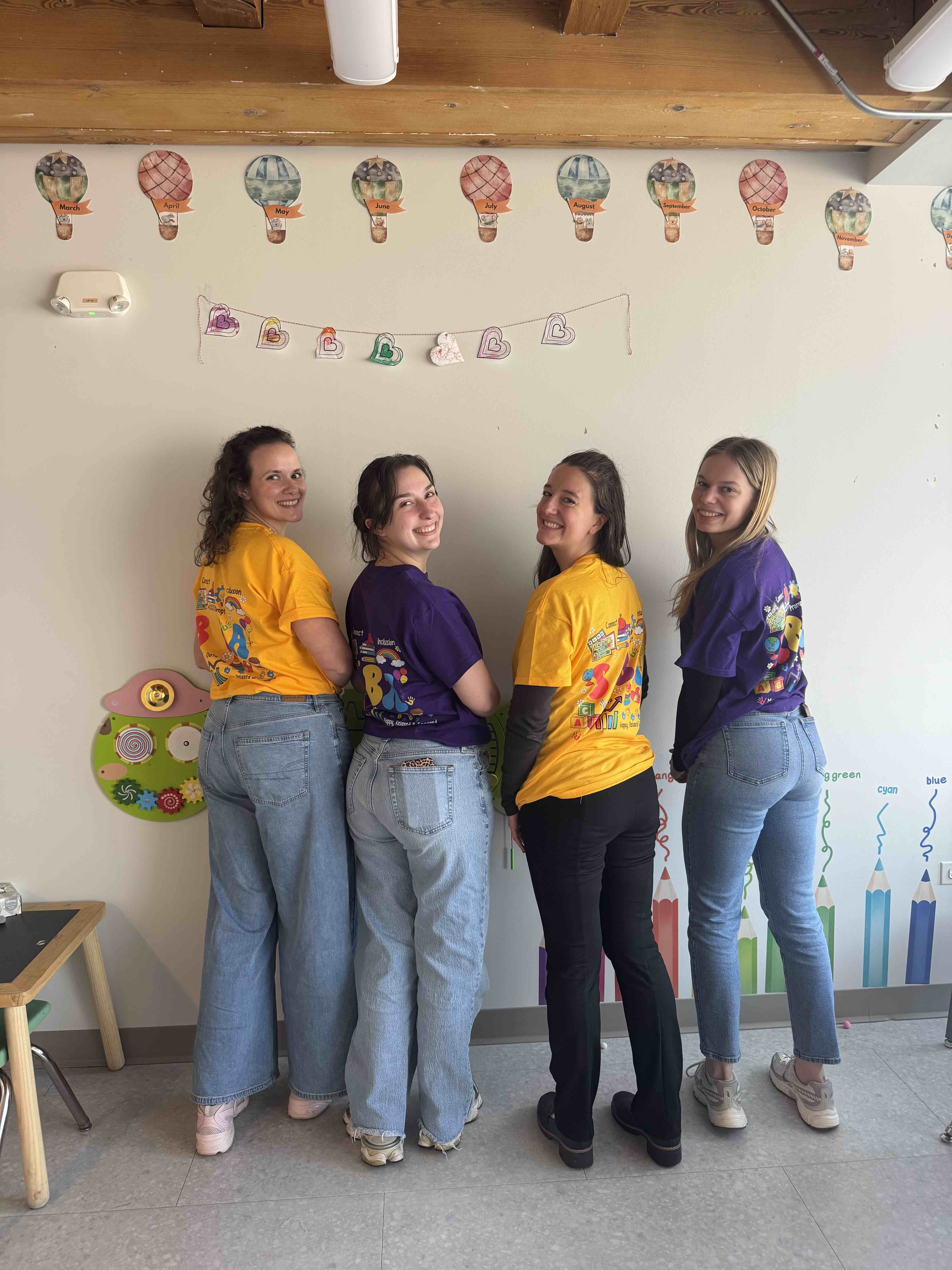
The Gracent BCBA Fellowship Program is a paid, four-stage career path that takes you from Behavior Therapist to Board Certified Behavior Analyst in an average of 12–16 months. Fellows earn restricted and unrestricted fieldwork hours on the clock, receive weekly supervision above BACB minimums, join a 12-week cohort study group, and get university tuition discounts. It runs at Gracent Pediatric Therapy and North Shore Pediatric Therapy centers across Illinois and Texas.
The receipts
team members who went from Fellowship student to BCBA with us — and counting.
of our fellows have passed the BCBA exam on the first attempt, on the current BACB task list.National first-time pass rate: 51% (BACB, 2025)
months, on average, from Fellowship student to stepping into a BCBA role.
unpaid fieldwork hours. Indirect and unrestricted time is compensated at your billable rate.
How We're Different
Every program promises support. The difference shows up in who pays for your indirect hours, who runs your study group, and whether anyone tracks whether you passed.
Many programs give you hours. We give you mastery.
The Path
Every career has a beginning. Not every path shows you what's next. Here's exactly what each stage looks like, what you're responsible for, and what's true about you by the time you leave it.
Stage one
Every great clinician starts with play. This is where you learn what good looks like at the closest possible range: on the floor, with the kid, running the program you'll one day write.
Stage two
This is where you stretch into leadership. You're still with kids every day, and now you have dedicated time in your week to practice work that actually builds a behavior analyst.
Stage three
Here's where you start to picture yourself as a BCBA. At 1,000 accrued hours you step into BCBA preparation mode.
Stage four
When you start as a BCBA here, you're already ahead. Most new BCBAs spend a year catching up. You'll walk in with the poise of someone who's been in the seat for one.
What You Actually Get
Becoming a BCBA is more than checking boxes and chasing hours. Too often students are left to assemble supervision, exam prep, and readiness on their own. This is what we built instead.
100% of our fellows pass the BCBA exam on the first attempt. The national first-time rate is 51%, and falling. Study alone if you want to gamble. Study with us if you want to pass.
You're paired with experienced BCBAs and clinical leaders who guide supervision, treatment planning, and the real-world calls. Plus 1:1 study sessions when a topic gets hard.
No chasing. From day one you earn restricted and unrestricted hours through structured work — onboarding, training, case support. Every task is purposeful, and every hour is paid.
20% off at The Chicago School of Professional Psychology plus an application fee waiver. 10% off at National Louis University. 10% off the FIT online ABA program, available in Texas too.
As an ACC and Lead ACC you onboard new hires, run intakes, and shape treatment plans. By exam day you're already functioning like a BCBA — the credential just catches up.
SLPs, OTs, mental health clinicians, and neuropsychologists work the same kids' cases in the same building. You'll learn things in your first year most BCBAs don't see in five.
The Part Nobody Explains
The BACB requires either 2,000 hours of Supervised Fieldwork or 1,500 hours of Concentrated Supervised Fieldwork, which carries a higher supervision requirement in exchange for fewer total hours. Most employers can only support the 2,000-hour track, because the concentrated track asks more of the supervisor, not the student.
We're set up for the concentrated track. That means more contact with your supervisor, more feedback, and 500 fewer hours between you and the exam.
You'll also never wonder where you stand. Hours are logged and countersigned on a schedule, not reconstructed from memory in the week you apply.
“Our BCBA Fellowship Program is one of the most impactful things we do for future BCBAs. It bridges the gap between student and clinician in a way that sets people up for long-term success. We've intentionally structured it so our students aren't just earning hours, they're learning how to lead, problem-solve, and think like a BCBA from the very beginning. By the time they sit for the exam, they're not only ready to pass, they're ready to step into the role with confidence.”
And Then?
You don't need to leave to level up. Every leader at Gracent started somewhere on this path.
Your own caseload of 6–8 kids. Assessments, programs, RBT supervision, family training.
You start growing others. Mentor BCBAs, take the complex cases, lead center initiatives.
You run a center. Direct clinical supervision of every clinician at your site.
You run a region. Clinical and operational leadership across multiple centers.
While You're a Fellow
Fellowship students are full team members from day one, with the same benefits as every other Gracent clinician.
Unrestricted and fieldwork time is compensated at your billable rate — not unpaid, not discounted.
PTO plus seven paid holidays from day one. Rest is part of how good work happens.
Gracent covers roughly 75% of the cost of your health benefits, starting your first day.
We invest in your future, not just the work you do today.
An annual stipend for external training, conferences, or certifications you choose.
We're a BACB ACE Provider (OP-17-2741). Continuing education runs in-house at no cost to you.
Fit Check
Honest Caveat
If you're looking for a signature on a supervision form and nothing else, this will feel like a lot. Fellows are in a study group every week, in intakes and parent trainings before they're certified, and supervised more closely than the BACB requires.
That's the trade. More structure now, less scrambling later. If being asked to be coached sounds like a burden rather than the point, we're probably not the right program — and we'd rather say that here than in month four.
We're not for everyone. That's the point.
The Real Questions
The questions you'd ask in an interview, answered here instead.
It's a paid, four-stage career path from Behavior Therapist to Board Certified Behavior Analyst. You start as a BT/RBT, move into an Assistant Clinical Coordinator role where half your time is unrestricted fieldwork, become a Lead ACC at 1,000 accrued hours with no direct therapy requirement, and step into a BCBA role. Average time from start to BCBA is 12–16 months.
Yes, at your billable rate. Indirect and unrestricted hours are compensated the same as direct time. As an Assistant Clinical Coordinator you're 50% direct and 50% unrestricted; as a Lead ACC you carry no direct therapy requirement at all. Unpaid supervision hours are the single most common complaint we hear from students at other organizations, and it's the first thing we fixed.
12–16 months is the average tenure of our students before they move into a BCBA role. Your actual timeline depends on where you are in your master's coursework and how quickly you accrue fieldwork hours, since the BACB requires both a qualifying degree and completed fieldwork before you can sit for the exam.
100%. Every Gracent Fellowship student who has sat for the BCBA exam on the current task list has passed on the first attempt. The national first-time pass rate was 51% in 2025, according to the BACB's own annual data, and it has declined every year since 2020. We track our number, we publish it, and we'd rather be measured on it than on adjectives.
Weekly, and above BACB minimums. We're structured to support the concentrated supervised fieldwork track, which requires more supervisor contact and in exchange reduces the total hours you need. Supervision is scheduled into your paid time — you won't be chasing your supervisor down or making up hours on a weekend.
A structured 12-week study group that meets 1.5 hours a week with your cohort, access to BDS modules, and one-on-one sessions with your Clinical Director or our support team when a specific content area isn't clicking. You study with people going through the same thing on the same timeline, which is most of the reason it works.
Yes, through university partnerships: 20% off tuition plus an application fee waiver at The Chicago School of Professional Psychology, 10% off at National Louis University, and 10% off the FIT online ABA program, which is available to our Texas team members as well. There's also a $500 annual professional development stipend and free in-house CEUs as a BACB ACE Provider.
Yes, RBT certification is a requirement to be a Fellowship student. But you don't need it to get hired. Plenty of our fellows start as Behavior Therapists, get RBT certified within 45 days (we pay for it and walk you through it), and move into the Fellowship from there. So the real answer is that you need the credential to start the Fellowship, not to start the conversation. What matters more at the application stage is that you're in, or entering, a master's program with a BACB Verified Course Sequence.
No direct therapy requirement. Instead: running intakes, guiding parent training sessions, assisting with discharges, sitting in on treatment planning, supporting new-hire onboarding, and your weekly study group and supervision. It's designed to look like the job you're about to have, with a BCBA in the room while you learn it.
At Gracent Pediatric Therapy and North Shore Pediatric Therapy centers across Illinois and Texas. In Illinois that includes Arlington Heights, Chicago (Bucktown), Deerfield, Des Plaines, Elmhurst, Glenview, Lake Bluff, Lincolnwood, Naperville, Vernon Hills, Wheaton, and Woodridge. In Texas: Denton, Keller, Missouri City, and Southlake. Availability varies by center.
That's the whole design. Fellows move into BCBA roles at Gracent — 33 team members have made exactly that transition. We're not training people for someone else's caseload. And once you're a BCBA, the path keeps going: Lead BCBA, Clinical Director, Area Director, with published salary bands at every rung.
Tell your Clinical Director. The stages are a structure, not a stopwatch. People move through at different speeds depending on their program, their life, and how quickly hours accrue. What we won't do is push you toward an exam date you're not ready for — the pass rate is the pass rate because nobody sits before they're ready.
How It Works
A clear process, fast movement, and we treat every candidate the same way we treat families — with honesty and care.
We review every application thoughtfully and personally. If it looks like a fit, we'll reach out quickly — usually within a few days, not weeks.
A real conversation, not an interrogation. We'll talk through what you're looking for and what the role actually looks like day-to-day, so expectations line up on both sides.
The people matter most, so you'll meet them. This is where we go deeper on your experience and approach, and where you get honest answers to the questions that matter to you.
Clear, transparent, and no surprises. We'll walk you through the offer, answer every question, and give you the space to make the right decision. No pressure.
Open Roles
Interested?
Take the first step toward a career that grows with you. From your first day as a Behavior Therapist to your first day as a confident BCBA, we'll be with you the whole way.